Understanding Your Pelvic Floor
Here’s what I want you to know: pelvic floor dysfunction is not something you have to live with. It’s not “just part of being a mum,” and it’s certainly not your fault.
Your pelvic floor isn’t a single muscle, it’s an intricate system of muscles, ligaments and nerves that support your bladder, uterus and bowel. When this system functions well, you move with ease, exercise without leakage, and feel secure in your body. When it doesn’t, your quality of life can be profoundly affected.
Pelvic floor dysfunction (PFD) describes a spectrum of conditions: from muscles that are too weak to muscles that are too tight, and often a complex mix of both. It’s far more common than you might think. After childbirth, around one in three women experience some level of pelvic floor weakness. Around menopause, hormonal changes can trigger symptoms in women who thought they’d moved past this phase.
Yet pelvic floor dysfunction remains one of the most under-discussed, under-treated issues in women’s health. Partly because of shame, and partly because so many women assume “this is just how it is now.”
It isn’t.
Whether your pelvic floor is weak, overactive and tight (hypertonic), or a combination of both, evidence-backed rehabilitation programmes, including Hypopressives, physiotherapy, Pilates and targeted yoga, can restore function, confidence and quality of life.
This guide takes you through what’s happening in your body and what you can do about it.
The Weakened Pelvic Floor
What is a weak pelvic floor?
A weak pelvic floor means the muscles and supporting connective tissues have lost tone, strength or endurance. They’re no longer providing adequate support for your organs or closure around the urethra and anus.
When your pelvic floor is weak, you may experience:
- Involuntary leaks with coughing, sneezing, laughing or exercising (stress incontinence)
- A feeling of heaviness or bulging in the vagina (prolapse)
- Difficulty controlling bowel movements
- A general sense of “looseness” through your core
Importantly, weakness isn’t just about “size” or “gap”, it’s about function. A pelvic floor can be anatomically wide on ultrasound but still reasonably functional if the muscle fibres have good tone and can contract reflexively. Conversely, a pelvic floor that looks “normal” on measurement can feel weak and unresponsive because the muscle fibres have lost their resting tension or their ability to coordinate during functional tasks.
What causes pelvic floor weakness?
Pregnancy and childbirth are the primary drivers. During pregnancy, the weight of the baby, and hormonal changes, particularly rising relaxin levels, place chronic mechanical load on the pelvic floor. The levator ani muscle, the main supporting structure, is stretched significantly.
During vaginal delivery, the levator ani and surrounding connective tissues experience direct trauma, stretching, tearing or even avulsion (complete detachment from the pubic bone). Research shows that approximately 10–36% of women who deliver vaginally experience levator ani avulsion, a significant structural injury that can take months or years to heal.
Even without avulsion, the pelvic floor undergoes substantial enlargement and weakening immediately postpartum. Recovery is not automatic. Studies using 3D ultrasound show that most recovery occurs within the first 6 months postpartum, but not all women return to their pre-pregnancy baseline. This is why proactive pelvic floor rehabilitation in the early postpartum period is so important.
Hormonal changes at menopause trigger a second wave of pelvic floor weakness. Falling oestrogen levels cause the vaginal tissues and supporting fascia to thin and lose elasticity (atrophy). Blood flow to the pelvic floor decreases, and the muscles themselves lose bulk and contractile strength. Women who sail through their 40s without symptoms may suddenly experience incontinence, heaviness or sexual dysfunction in their early 50s.
Lifestyle and cumulative pressure also weaken the pelvic floor over time:
- Chronic constipation and straining on the toilet
- Persistent coughing from smoking, asthma, or chronic bronchitis
- Repeated heavy lifting without proper breath and core engagement
- High-impact exercise (running, jumping) without adequate pelvic floor conditioning
- Being overweight, which increases constant downward pressure
These factors don’t necessarily cause acute injury, but over years, they exhaust the pelvic floor’s ability to maintain its baseline strength and support.
The Hypertonic Pelvic Floor
What is a hypertonic pelvic floor?
A hypertonic (or “high-tone”) pelvic floor is the opposite problem: the muscles are chronically contracted, tense or in spasm. They’re “always switched on,” never fully relaxing.
This sounds like it should be strong, but it’s not. A muscle that cannot relax cannot coordinate properly. It cannot lengthen when it needs to (during urination, defecation or penetration), and it’s often exhausted, painful and dysfunctional.
Symptoms of hypertonic pelvic floor
The sensations can manifest across the bladder, bowels and sexual organs:
Urinary symptoms:
- Pain or burning when urinating
- Frequent urination
- Difficulty starting or maintaining urinary stream
- Bladder pain or discomfort
Bowel symptoms:
- Constipation and difficulty with bowel movements
- Feeling unable to fully empty the bowels
- Pain during or after bowel movements
- Difficulty passing gas
Sexual and pelvic symptoms:
- Pain during or after intercourse (dyspareunia)
- Difficulty achieving orgasm
- General pelvic pain or heaviness
- A feeling of tightness or “clutching” in the vaginal area
What causes a hypertonic pelvic floor?
Birth trauma and scar tissue is a significant trigger. Women who experience perineal tearing or vaginal tearing may develop hypertonic muscles as a protective response. The body “guards” around the injury, and the muscles never fully release again. One-sided tears can cause the opposite side of the pelvic floor to tighten excessively to compensate.
I experienced this myself after my third-degree tear. The words “I am so sorry, this is the first one I’ve seen in 25 years” did nothing to dispel my fears. What followed were weeks of not being able to sit, appointments, infections—none of it was what I had imagined motherhood would be. And whilst my stitches eventually healed and I regained function, I know from working with hundreds of women that this protective tightening is incredibly common.
Chronic pelvic pain conditions such as endometriosis, interstitial cystitis, irritable bowel syndrome (IBS) and pudendal neuralgia often co-exist with or trigger hypertonic pelvic floor muscles. The chronic inflammation and pain cause the muscles to clench protectively, and over time, that tension becomes their “baseline.”
Psychological trauma and stress can also cause hypertonicity. The pelvic floor is intimately connected to the nervous system and our sense of safety. Past sexual trauma, anxiety or chronic stress can result in the pelvic floor muscles remaining in a state of protective contraction.
Pregnancy itself can contribute. Some women develop hypertonic muscles in response to the growing weight and mechanical changes of pregnancy.
Diagnosing Your Pelvic Floor
Accurate diagnosis is crucial because the treatment for a weak pelvic floor (strengthening) is very different from treatment for a hypertonic one (relaxation).
Clinical assessment
A pelvic health physiotherapist or urogynaecologist will perform:
A detailed history: pregnancies, births, pelvic surgery, symptoms, triggers, bladder and bowel habits, sexual function, pain, stress levels and medical conditions.
A pelvic examination: The clinician inserts one or two fingers into the vagina and feels for:
- Resting tone: Are the muscles tight or slack at rest?
- Contractility: Can you voluntarily squeeze the muscles? How strong is the contraction? Can you sustain it?
- Relaxation: Can you fully relax the muscles after contracting, or do they stay tense?
- Tenderness or pain: Are there trigger points or tender areas?
- Prolapse: How much do the organs bulge downward when you bear down?
Imaging: In some cases, transperineal or transvaginal ultrasound is used to visualise the pelvic floor muscles, measure the levator hiatus (the opening at the centre of the pelvic floor), assess the cross-sectional area of the levator ani muscle and identify avulsion (muscle tear).
Self-awareness checklist
Before seeing a specialist, you can begin to recognise your own pattern:
Signs of weakness:
- Leaking with cough, sneeze, laugh or exercise
- Heaviness, bulging or dragging sensation in the vagina
- Difficulty holding urine or faeces
- Feeling “loose” or unsupported through the core
- Difficulty returning to high-impact exercise postpartum
Signs of hypertonicity:
- Pain with intercourse or insertion (tampon, speculum)
- Pain or burning with urination
- Chronic constipation
- Difficulty fully relaxing or “letting go” during urination
- Pelvic, tailbone or lower back pain that seems related to tension
- Pain or tenderness when pressing on the pelvic region
Many women have both – a mixed pattern where some muscles are weak and others are tight. This is especially common postpartum or after pelvic trauma.
Treatment: Restoring Function
The treatment pathway depends on your specific pattern, severity and goals. Evidence-backed options include pelvic floor muscle training, Hypopressives, Pilates, yoga, biofeedback, and, in some cases, medical support.
1. Hypopressives (Low Pressure Fitness)
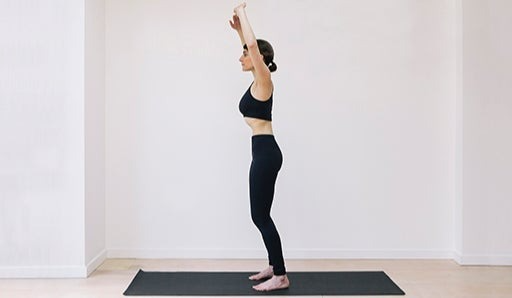
Hypopressive exercises are increasingly recognised as a powerful tool for pelvic floor rehabilitation. Unlike traditional pelvic floor muscle training, which focuses on voluntary squeezing, Hypopressives work through reflex activation and pressure management.
How Hypopressives work:
The technique combines specific postures and a breath-hold (called an Apnea) to create a gentle reduction in intra-abdominal pressure. This “vacuum effect” naturally draws the pelvic floor upwards and encourages automatic contraction without conscious effort. The deep transverse abdominis and pelvic floor muscles activate together, improving their coordination and reflex response during everyday movements like lifting, coughing and changing position. Critically, Hypopressives avoid the downward-pressing sensation that some women feel with high-intensity core work or incorrect pelvic floor squeezing. This makes them particularly valuable for:
- Postpartum women who feel “open” or destabilised
- Women with mixed incontinence who feel worse with traditional abdominal bracing
- Women with hypertonic pelvic floors who need to release tension before they can properly strengthen
The science behind Hypopressves:
A blinded randomised controlled trial published in Neurourology and Urodynamics (2023) evaluated 117 women with pelvic floor dysfunction and urinary incontinence over 8 weeks. Results were striking:
- Pelvic floor muscle strength improved significantly
- Pelvic Floor Impact Questionnaire (PFIQ-7) scores, measuring impact on quality of life, dropped dramatically
- Pelvic Floor Distress Inventory (PFDI-20) scores, measuring symptom severity, reduced significantly
- Urinary incontinence severity (ICIQ-SF) improved substantially
Importantly, these gains were achieved with just 8 weeks of supervised training, three times per week for 10–20 minutes per session.
A second study using ultrasound imaging compared Hypopressives with traditional pelvic floor muscle training over 12 weeks in 58 women with pelvic organ prolapse. Both methods increased the cross-sectional area (CSA) of the levator ani muscle, with pelvic floor muscle training showing approximately 50% improvement and Hypopressives approximately 20% improvement. Both also reduced the genital hiatus area and improved the elevated position of the bladder and rectum, reducing prolapse severity.
These findings suggest that Hypopressives are a credible, evidence-backed alternative or complement to traditional PFMT, particularly for women who find conventional pelvic floor exercises uncomfortable, ineffective or triggering.
2. Traditional pelvic floor muscle training (PFMT)
PFMT, often called “Kegels”, remains the gold standard first-line treatment recommended by physiotherapy bodies and international guidelines. It involves learning to voluntarily contract and relax the pelvic floor muscles in structured patterns to build strength and endurance.
How PFMT works:
A physiotherapist teaches you to identify and isolate your pelvic floor muscles (not your buttocks or abdominal muscles – a common error). You then perform contractions at different intensities: slow, sustained holds (endurance) and quick, rapid pulses (fast-twitch strength). Over 12–16 weeks of consistent practice, the muscle fibres hypertrophy (grow) and become more responsive.
Important note on biofeedback:
Research shows that approximately 70% of women cannot correctly perform pelvic floor contractions with verbal instruction alone. This is why supervised training or biofeedback is recommended. Biofeedback uses surface electromyography (EMG) sensors and a visual display to show you in real-time whether you’re contracting the correct muscles, holding enough tension and achieving full relaxation between contractions. This immediate feedback significantly accelerates learning and improves long-term outcomes, particularly for stress incontinence and prolapse.
For hypertonic pelvic floors, biofeedback is used in reverse, as “down training”, to help women learn to relax and lengthen the muscles, combined with relaxation techniques and gentle stretching.
3. Pelvic floor-focused Pilates
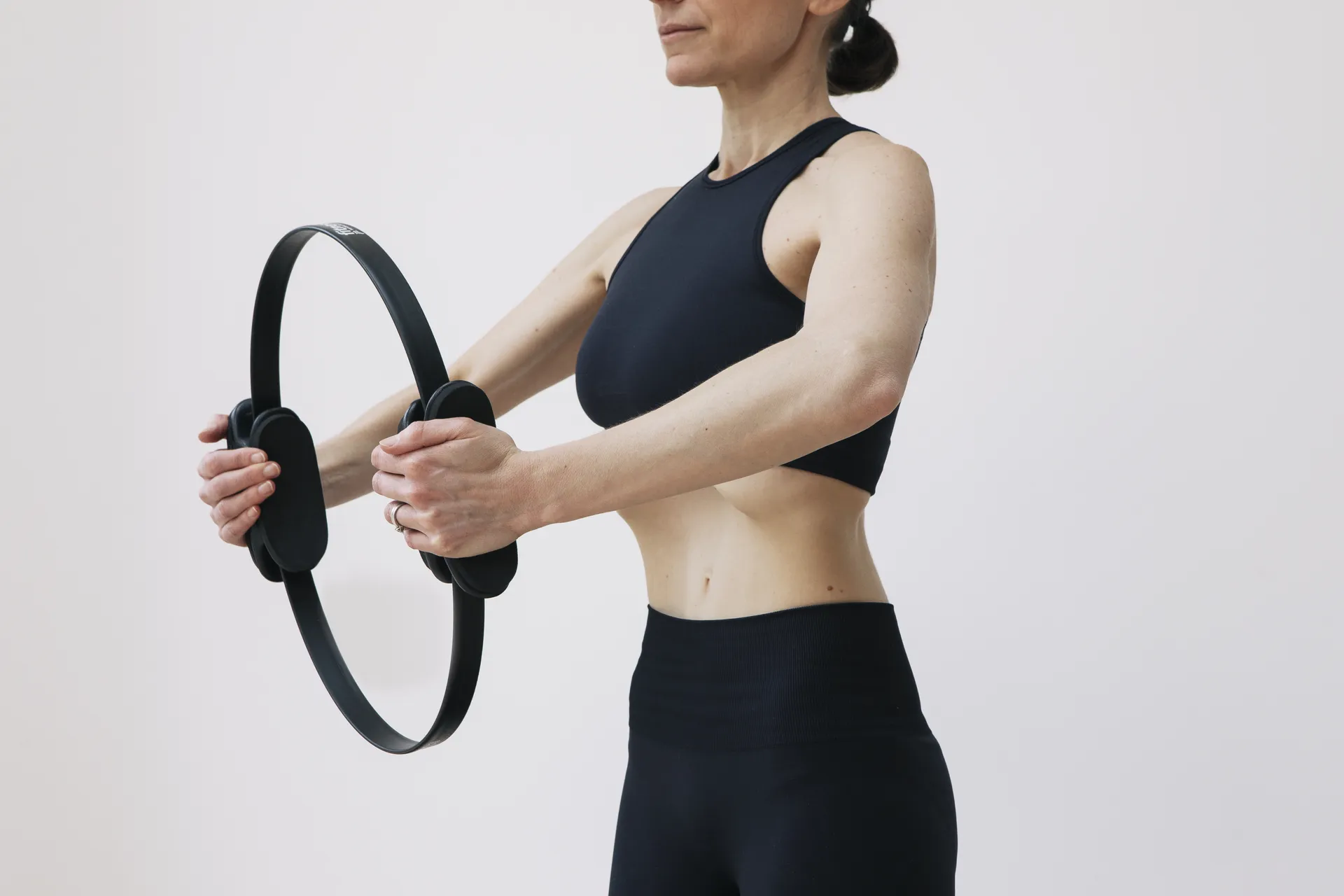
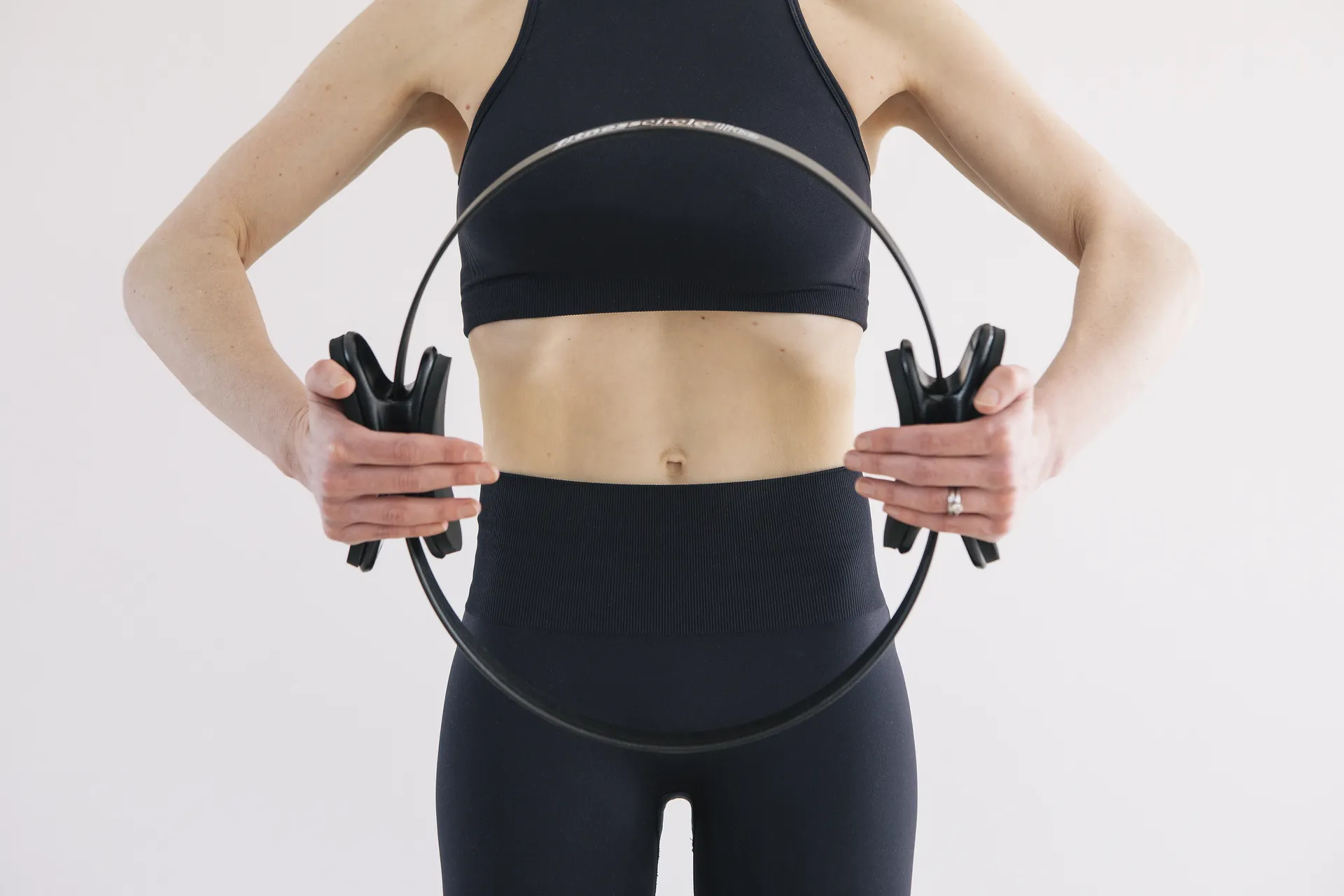
Pilates is an excellent complement to PFMT or Hypopressives because it builds functional core strength while training pressure management and coordination.
What pelvic floor-aware Pilates does:
- Strengthens the deep transverse abdominis (TvA), which co-activates with the pelvic floor
- Improves postural alignment, which takes strain off the pelvic floor
- Teaches breath coordination and pressure awareness during movement
- Progressively loads the core and pelvic floor in a controlled way (avoiding doming or bulging)
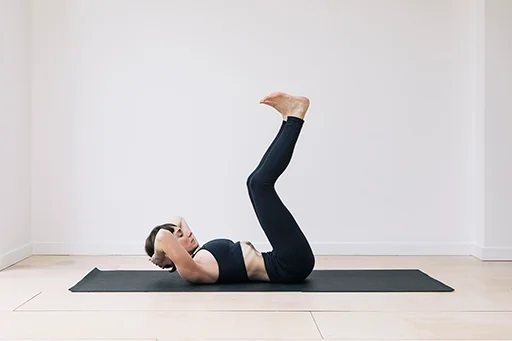
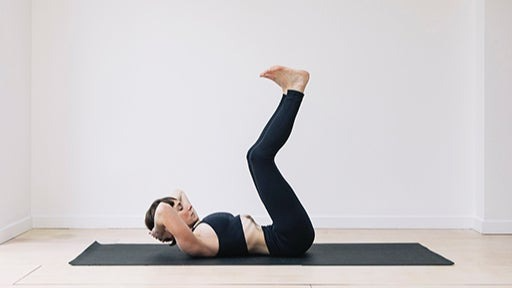
Movements like heel slides, modified side planks, bird-dogs and controlled Pilates breathing help you integrate pelvic floor function into everyday movement patterns. Unlike traditional “core” training (crunches, planks), pelvic floor-safe Pilates respects the system’s limitations and builds capacity gradually.
4. Yoga for the pelvic floor
Gentle, mindful yoga can be transformative for pelvic floor health, especially for hypertonic pelvic floors that need to release tension.
Beneficial poses include:
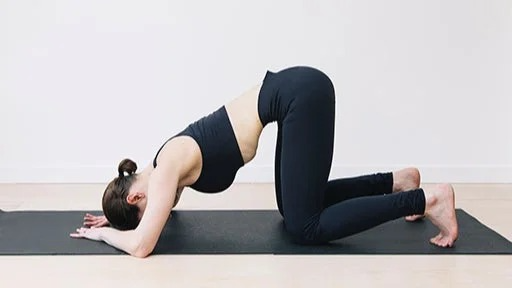
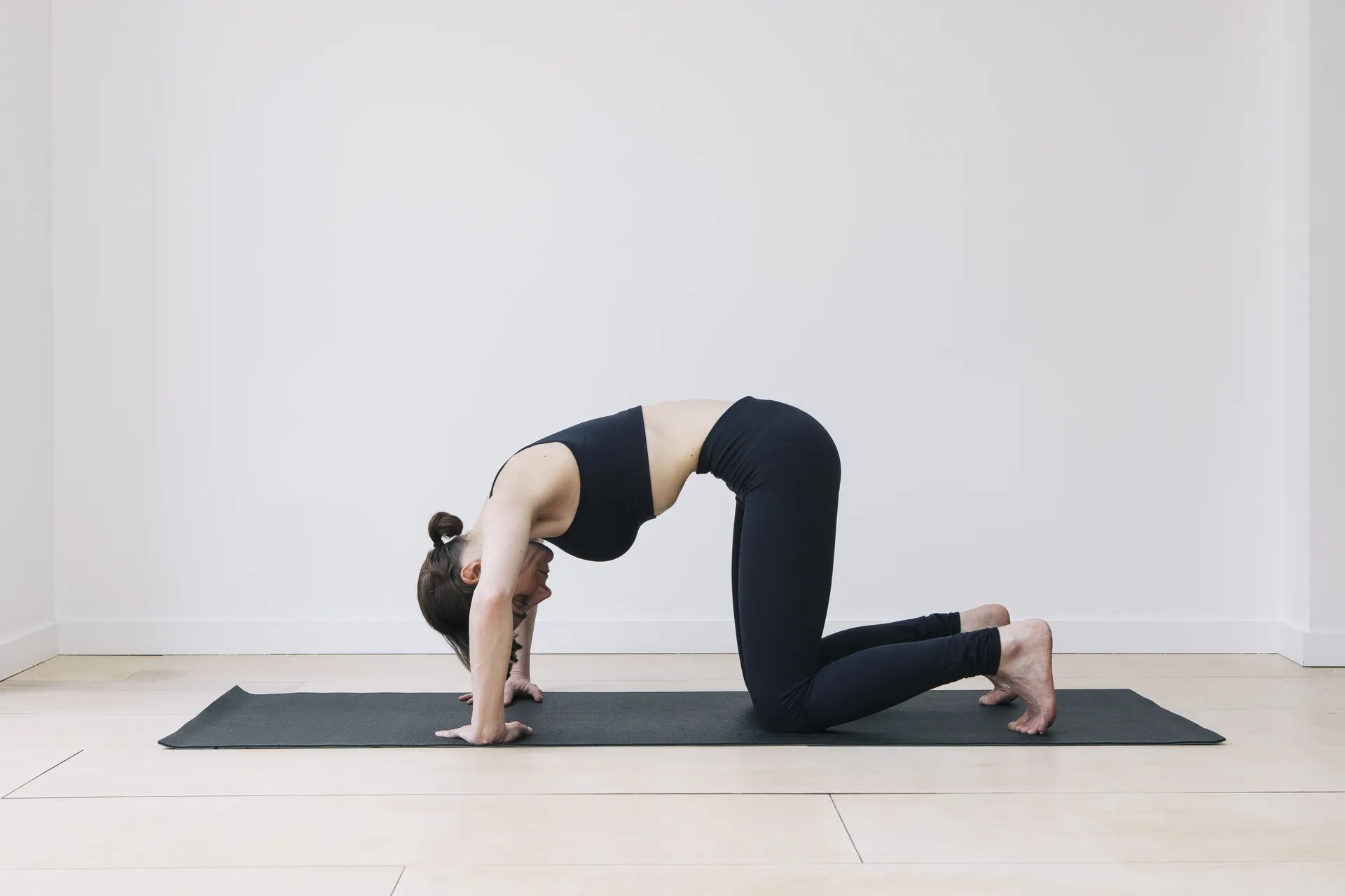
- Child’s pose and Cat-Cow for pelvic floor lengthening
- Malasana (deep squat) to open the hips and lengthen the pelvic floor
- Supported Bridge to activate and lengthen evenly
- Legs-up-the-wall (Viparita Karani) to reduce downward pressure
- Reclined Butterfly to open the hips and ease pelvic tension
Crucially, yoga paired with conscious breathing, especially diaphragmatic breathing, where the belly rises on the inhale and the pelvic floor gently relaxes, helps the nervous system shift from “guard mode” to “rest and restore” mode. For women with trauma-related hypertonicity or anxiety-driven pelvic floor tension, this mind-body integration is often essential.
6. Multimodal approach: Combining therapies
In clinical practice and supported by evidence, the best outcomes often come from combining approaches:
For weakness: Hypopressives (to restore reflex activation and pressure control) + PFMT (to build structural strength) + Pilates (to integrate into functional movement)
For hypertonicity: Relaxation-focused PFPT + gentle yoga + breathing work + biofeedback “down training”
For mixed dysfunction: A carefully staged approach, often beginning with relaxation (if there is tension) before moving to strengthening (if there is weakness)
This combination addresses both the local pelvic floor and the global system – breath, posture, core stability, movement patterns and nervous system state, which is why outcomes improve more reliably than with any single approach alone.
Recovery Timeline and Expectations
Weeks 1 to 4: Reconnection phase
When you start a structured pelvic floor programme, your first job is to reconnect with the muscles and reestablish the brain-pelvic floor connection. Many women have been dissociated from this region for months or years due to pain, trauma, avoidance or simply not knowing it was important.
In these early weeks, you may not notice dramatic symptom change. Instead, you become more aware: you feel the muscles more clearly, you notice which movements trigger symptoms, you realise the tension you’re holding. This is progress.
For weak pelvic floors: You may notice a slight improvement in awareness and perhaps early hints of better support with high-load activities.
For hypertonic pelvic floors: You may feel more conscious of the tension, and initial release techniques might bring temporary relief followed by re-tightening as your nervous system recalibrates.
Weeks 4 to 8: Structural change begins
This is when measurable, structural changes start to emerge. Muscle fibres are receiving consistent stimulus; blood flow improves; resting tone shifts.
In the Hypopressives RCT, significant improvements in pelvic floor strength, symptom distress and quality of life impact were observed by week 8. Women report fewer leaks during light triggers (small coughs, gentle walks), less heaviness by end of day, and greater confidence in low-intensity activities.
For hypertonic pelvic floors, consistent relaxation work and biofeedback begin to lower resting muscle tone. Symptoms like pain with intercourse or bladder discomfort often start to ease.
Weeks 12 to 16: Consolidation and return to function
By the 12-week mark, the standard NHS benchmark for pelvic floor rehabilitation, most women report meaningful improvement in symptoms and a noticeable increase in confidence and quality of life. Leakage may reduce significantly or resolve entirely for stress incontinence; urgency and frequency often improve for overactive bladder; heaviness and bulging sensations often ease with prolapse.
At this point, many women are ready to progress: returning to higher-impact exercise, increasing loads, testing their newfound strength in real-world scenarios.
3 to 6 months: Return to activity
With consistent practice and progressive loading, most women can return to running, jumping, heavy lifting and sport by 3 to 6 months, often with greater confidence and fewer symptoms than before.
6 months and beyond: Maintenance and long-term resilience
The pelvic floor, like any muscle, requires ongoing maintenance. Women who sustain improvements typically continue a maintenance programme: 2–3 sessions of Hypopressives per week, or twice-weekly Pilates, plus mindful daily habits (breathing, lifting technique, pelvic awareness).
Important: Not all women will reach complete “cure”, especially if they have significant structural injury, prolonged weakness or complex trauma. However, most women will see meaningful, measurable improvement in symptoms and quality of life if they adhere to a structured, progressive programme tailored to their specific pattern.
Practical Strategies for Daily Life
Breathing and pressure management
The most powerful tool at your disposal is your breath. How you breathe influences intra-abdominal pressure and pelvic floor loading.
Pressure-friendly breathing:
- Inhale through your nose, allowing your belly to expand naturally (diaphragmatic breathing)
- Exhale on effort: when lifting, pushing, coughing or standing up, always exhale
- Never hold your breath and “brace hard” – this creates excessive downward pressure
When lifting your child, carrying shopping or exercising, think “exhale on the effort”. This reflex engages your deep core and pelvic floor naturally, without conscious squeezing.
Movement and positioning
Get out of bed: Roll to your side first, then push yourself up with your arms – don’t sit straight up
Lifting: Bend your knees, keep the load close to your body, and exhale as you lift
Sitting: Avoid prolonged slouching, which increases downward pressure. Stack your ribs over your pelvis
Toilet habits: Avoid straining; if constipation is an issue, address it through diet, hydration and gentle movement
Managing symptom flares
It’s common to have flares – days or weeks when symptoms worsen. This is not failure; it’s your body communicating that you’ve overdone something.
When symptoms flare:
- Reduce high-impact activity temporarily
- Increase Hypopressives, relaxation or gentle stretching
- Check your stress level and sleep – nervous system state directly affects pelvic floor tone
- Return gradually to previous levels
Key Takeaways
Pelvic floor dysfunction is common, treatable, and not something you have to live with. Whether your issue is weakness, hypertonicity or a mix, evidence-backed rehabilitation can restore function and confidence.
Hypopressives offer a fresh, evidence-backed approach, particularly for postpartum women and those with mixed symptoms. An 8-week RCT of 117 women showed significant improvements in strength, symptom distress and quality of life impact.
Diagnosis matters. Weak and hypertonic pelvic floors require different approaches. A proper assessment by a pelvic health physiotherapist ensures you’re doing the right thing for your specific pattern.
Multimodal treatment works best. Combining Hypopressives, PFMT, biofeedback, Pilates, yoga and lifestyle changes addresses the whole system and yields better outcomes than any single approach.
Consistency beats intensity. 10–20 minutes of Hypopressives, 3 times per week, or regular Pilates or yoga with pelvic awareness, sustained over 12 weeks and beyond, is far more effective than sporadic intensive bursts.
Recovery takes time, but it works. Most women see meaningful improvement by 8–12 weeks and can return to full activity by 3–6 months with a tailored programme.