Perimenopause and Menopause: Your Complete Guide to Navigate with Strength
Midlife brings change, there’s no getting around that. But here’s what I want you to know: this transition doesn’t have to mean accepting a diminished version of yourself. Your body is shifting, yes, but with the right understanding and support, you can move through perimenopause and menopause feeling stronger, more connected, and more empowered than ever.
I’ve worked with hundreds of women navigating this phase, and I’ve seen firsthand how transformative the right approach can be. The hormonal shift of midlife is like a second major stress test for the pelvic floor, after pregnancy and birth. But just as your body proved its resilience then, it can do so again now.
This guide is everything you need to understand what’s happening in your body, why your pelvic floor and core are affected, and exactly what you can do about it.
In Short: What Are Perimenopause and Menopause?
Perimenopause is the transition phase when your hormone levels start to fluctuate and your menstrual cycle becomes irregular, often in your 40s. Menopause is reached when you have gone 12 consecutive months without a period (not due to contraception), marking the end of your reproductive years. During both phases, falling oestrogen affects not just hot flushes and mood, but also your pelvic floor, bladder, and vaginal tissues.
Why This Stage Matters for Your Pelvic Floor
Perimenopause and menopause are often described in terms of hot flushes, brain fog, and sleep, but for many women the most disruptive symptoms are pelvic: new leaks, urgency, a feeling of heaviness, discomfort with sex, or a higher frequency of UTIs. These changes can creep up slowly and are easy to dismiss as “just getting older” or “because I’ve had kids,” yet they have a huge impact on confidence, intimacy, exercise, and everyday life.
The hormonal shift of midlife is like a second major stress test for the pelvic floor – after pregnancy and birth. As oestrogen drops, the tissues and muscles that support your bladder, uterus, and bowel lose some of their thickness, elasticity, and strength. If your pelvic floor was already working hard to keep up after babies, or you have a history of prolapse or incontinence, this stage can unmask or worsen symptoms.
The important message is that none of this is inevitable or untreatable. With the right combination of pelvic floor rehabilitation (including Hypopressives), lifestyle adjustments, and when appropriate, hormonal treatments like vaginal oestrogen, you can support your pelvic floor through this transition and beyond.
What’s Happening in Your Body: Hormones, Tissues, and the Pelvic Floor
Perimenopause and menopause 101
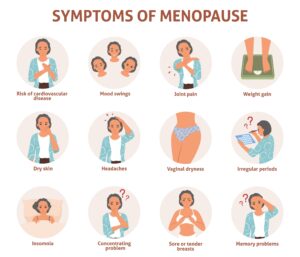
Perimenopause usually starts in your 40s (earlier for some women) and can last several years. You might notice your cycles becoming shorter or longer, heavier or lighter, alongside symptoms like hot flushes, night sweats, mood swings, joint stiffness, menopause belly, fatigue, and changes in libido. Hormone levels fluctuate from month to month.
Menopause is officially reached when you have had no periods for 12 months in a row (in women over 45, this is usually diagnosed based on symptoms alone, without needing blood tests). After that, you are postmenopausal: oestrogen and progesterone remain low, and androgen levels may also decline over time.
How falling oestrogen affects pelvic tissues
Oestrogen receptors are found in the vagina, vulva, urethra, bladder trigone, pelvic floor muscles, and the ligaments that support the pelvic organs. When oestrogen levels drop:
Vaginal walls become thinner, drier, and less elastic. This is part of what’s now called genitourinary syndrome of menopause (GSM).
Urethral lining and the “mucosal seal” lose plumpness, reducing the closing pressure of the urethra and making leaks more likely when pressure suddenly rises (coughing, sneezing, jumping).
Bladder tissue changes can contribute to urgency, frequency, and overactive bladder symptoms.
Connective tissues and ligaments in the pelvic floor lose some of their collagen quality and elasticity, reducing support for the bladder, uterus, and bowel and increasing the risk of pelvic organ prolapse.
Pelvic floor muscles are affected by both hormonal change and age-related muscle loss; they can lose bulk, endurance, and power if not actively trained.
You can think of this as the scaffolding (ligaments and fascia), the hammock (pelvic floor muscles), and the soft coverings (vaginal and urethral tissues) all becoming a little less robust at once, especially if they were already under strain from previous pregnancies, births, heavy lifting, or high-impact exercise.
Common Pelvic Floor Symptoms in Perimenopause and Menopause
Every woman’s experience is different, but some patterns are very common in midlife.
Bladder and continence changes
- Leaking when you cough, sneeze, laugh, lift, or run (stress urinary incontinence)
- Sudden, strong urges to pee, sometimes with leakage on the way to the toilet (urge incontinence/overactive bladder)
- Going more often than before, or waking multiple times at night to pass urine
- More frequent urinary tract infections or burning/irritation when passing urine
Heaviness and prolapse symptoms
- A feeling of heaviness, dragging, or pressure in your vagina or pelvis by the end of the day
- A sense that something is “coming down” or a bulge at the vaginal opening
- Difficulty fully emptying your bladder or bowel, or needing to change position/splint to pass stools
These are typical signs of pelvic organ prolapse, which becomes more common after menopause, particularly in women who have had vaginal births.
Sexual and vaginal changes
- Vaginal dryness, burning, or itching
- Pain with penetration or pelvic examination (dyspareunia)
- Reduced natural lubrication, which can lead to micro-tears and soreness
- Changes in orgasm sensation or ability to orgasm, partly due to pelvic floor and tissue changes
Bowel and pelvic pain issues
- New or worsening constipation, sometimes linked to pelvic floor coordination
- Pelvic, lower back, tailbone, or hip pain related to pelvic floor tension or weakness
- For some women, a hypertonic (overactive) pelvic floor can coexist with menopausal tissue changes, causing pain and urgency alongside weakness and leakage
If any of these symptoms are familiar, it doesn’t mean “game over” for your pelvic floor. It means your system is giving you feedback that it needs support.
Your Pelvic Health Toolkit in Perimenopause and Menopause
There is no single magic bullet. The most effective approach is usually multi-layered: combining pelvic floor rehab, pressure-aware movement, lifestyle changes, and where appropriate, hormone support.
1. Hypopressives (Low Pressure Fitness)
At re-centre, Hypopressives are central to our approach because they work on pressure management and reflex support, which are crucial in midlife.
How Hypopressives help
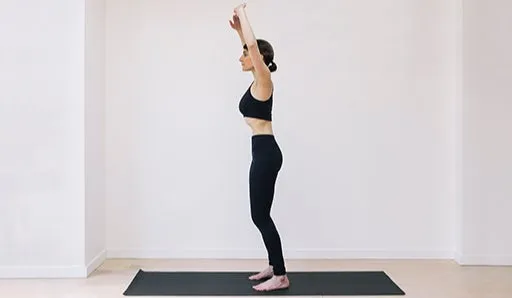
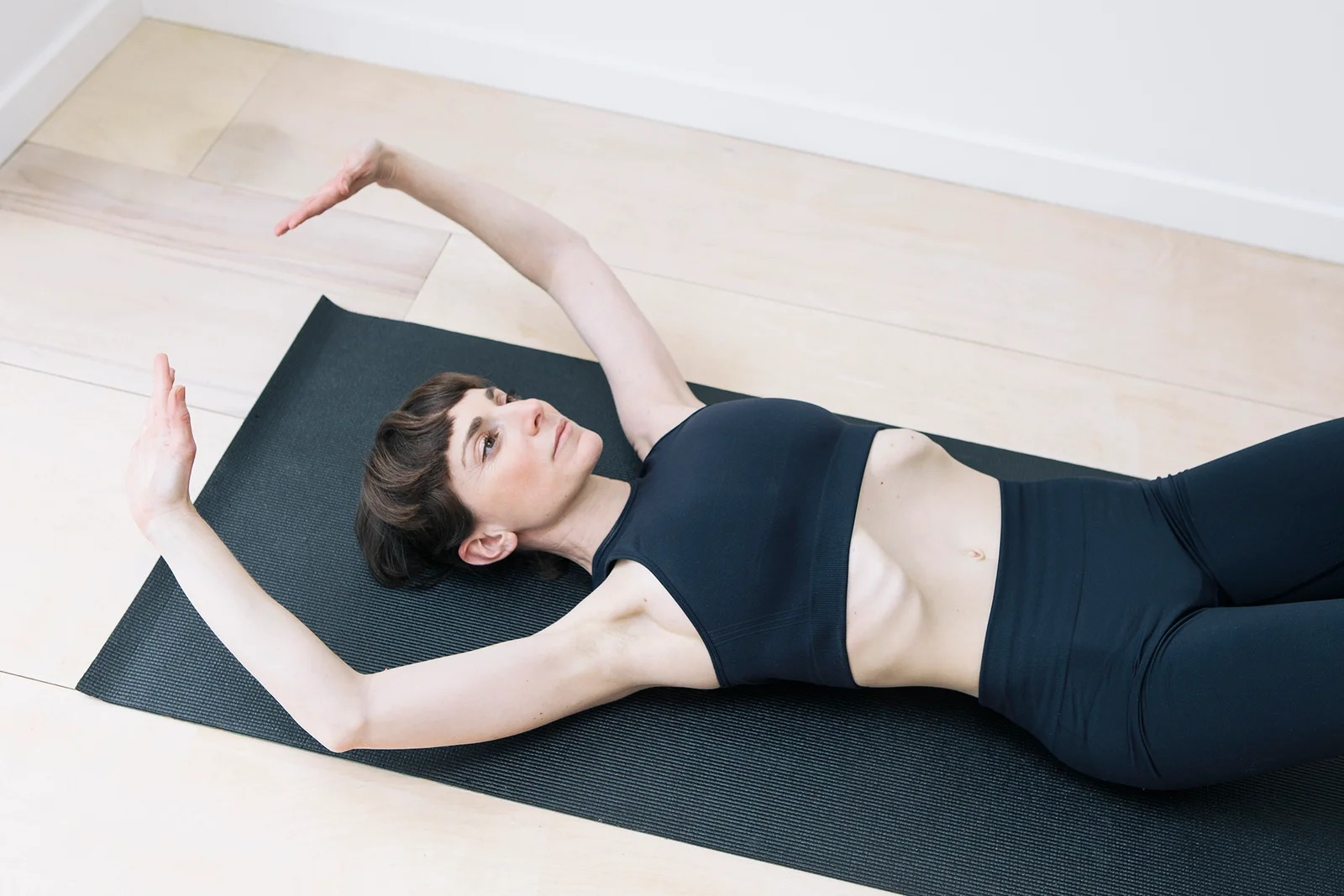
Hypopressive exercises combine specific postures, rib opening, and a breath-hold (Apnea) to create a gentle reduction in intra-abdominal pressure and a “vacuum effect” through the torso. This encourages a reflex lift of the pelvic floor and deep core rather than a conscious squeeze.
For perimenopausal and menopausal women, this matters because:
- You can activate and strengthen the pelvic floor without bearing down or aggravating prolapse
- You retrain how your body manages pressure during daily tasks and exercise, so coughing, laughing, or lifting are better supported
- It is low-impact, joint-friendly, and compatible with fatigue and joint aches that can make high-intensity exercise feel less appealing
The scientific evidence
A randomised controlled trial in women with pelvic floor dysfunction (including urinary incontinence) found that an 8-week Hypopressive programme (three sessions per week) led to:
- A significant increase in pelvic floor muscle strength (statistically highly significant)
- Significant reductions in pelvic floor distress (PFDI-20 scores) and impact on daily life (PFIQ-7)
- A meaningful improvement in urinary incontinence severity (ICIQ-SF scores)
Ultrasound-based studies comparing Hypopressives with conventional pelvic floor muscle training show that both approaches can increase levator ani muscle thickness, reduce genital hiatus area, and improve pelvic organ support, with PFMT typically giving larger gains but Hypopressives also providing significant structural and functional improvements.
In practice: Hypopressives can be used on their own or in combination with PFMT to maintain pelvic floor function and support through perimenopause and beyond.
2. Pelvic floor muscle training (PFMT)
PFMT (often called Kegels) remains a strong treatment for stress and mixed urinary incontinence and is recommended for women with mild to moderate prolapse.
Why it’s especially important now
- It counteracts age and hormone-related muscle loss in the pelvic floor
- It increases strength, endurance, and timing of contractions, helping you resist sudden pressure spikes (coughing, sneezing, lifting, jumping)
- It supports prolapse management and can help stabilise or improve mild prolapse symptoms
Systematic reviews show that women doing structured PFMT are significantly more likely to report cure or improvement in incontinence than women who do nothing, with reduced leakage episodes and improved quality of life.
Getting the technique right
Up to 70% of women cannot perform a correct pelvic floor contraction with verbal instructions alone. Many inadvertently hold their breath or bear down instead of lifting.
This is where pelvic health physio, digital tools, or biofeedback come in. EMG biofeedback uses sensors to show you in real time whether you are contracting and relaxing the right muscles. Studies indicate that EMG-guided PFMT can improve outcomes compared with unsupervised Kegels, particularly in stress incontinence and mixed pelvic floor dysfunction.
For some women (especially those with hypertonic or high-tone pelvic floors), the first step is learning to relax the muscles before strengthening them. Biofeedback can also be used to “down-train” overactive muscles.
3. Local vaginal oestrogen (and how it supports rehab)
NICE guidance and multiple studies support the use of local (vaginal) oestrogen for genitourinary syndrome of menopause. Low-dose creams, tablets, or rings are applied directly in the vagina.
What the evidence shows
A systematic review of local oestrogen for pelvic floor disorders found strong evidence that it improves vaginal atrophy symptoms (dryness, soreness, dyspareunia), and promising evidence for improvements in overactive bladder symptoms and some aspects of urinary incontinence.
Intravaginal oestrogen used before pelvic floor surgery or pessary fitting improves vaginal epithelium and comfort, and can reduce complications such as discharge, bleeding, and erosion.
NICE and British Menopause Society materials support ongoing use of low-dose vaginal oestrogen for persistent GSM symptoms, with periodic review.
Here’s the key: vaginal oestrogen improves the quality of the tissues you’re working with, making pelvic floor exercises, Hypopressives and Pilates more comfortable and effective.
Systemic HRT (tablets, patches, gels) may also indirectly help pelvic symptoms by improving sleep, mood, energy, and joint pain, which in turn makes it easier to exercise and engage with rehab. Decisions about systemic HRT should be made with a menopause-aware GP or specialist, following NICE and local guidelines.
4. Movement, strength, and lifestyle for midlife pelvic health
Your pelvic floor doesn’t live in isolation; it is part of a whole-body system. During perimenopause and menopause, the wider picture matters.
Pelvic floor-aware Pilates and strength training
Strength training for menopause is recommended in midlife to preserve muscle mass, support bones, and maintain metabolism.
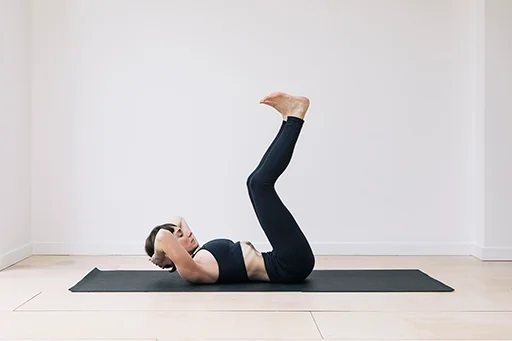
Pelvic floor-aware Pilates and strength work focus on:
- Deep core (transversus abdominis) and pelvic floor synergy
- Hip, glute, and back strength to support the pelvis and spine
- Pressure-friendly strategies: exhaling on effort, avoiding breath-holding and excessive bracing
This combination helps you keep doing the activities you love, whether that’s lifting, running, hiking, or yoga, while protecting your pelvic floor.
Yoga and mind–body practices
Gentle yoga can:
- Improve flexibility and joint comfort
- Support pelvic floor relaxation and awareness (particularly important if you tend to hold tension)
- Help manage stress and nervous system over-activation, which can reduce bladder urgency and pelvic pain in some women
Research in postpartum women suggests yoga can improve pelvic floor function and levator ani hiatus measurements (the area between the pubic symphysis and the puborectalis muscle, crucial for assessing pelvic organ prolapse); although the context differs, similar mechanisms likely apply in midlife when tissues and muscles are under hormonal stress.
Making minor Lifestyle Adjustments can make a big difference
Weight management: extra weight increases abdominal pressure and prolapse/incontinence risk; losing even a modest amount can help symptoms.
Bowel health: managing constipation with fibre, fluids, and toilet posture reduces repeated straining on the pelvic floor.
Bladder habits: moderating caffeine, alcohol, and fizzy or highly acidic drinks may reduce urgency and frequency.
Stress and sleep: supporting sleep and stress levels (as far as possible) helps your nervous system and pelvic floor work together, reducing flare-ups of urgency or pain.
Building Your Midlife Pelvic Health Plan
You don’t need a perfect routine. You need a sustainable one that fits your life. A realistic weekly mix might look like one or a combination of the following:
- 2–3 short Hypopressive sessions (10–20 minutes), focusing on breath, posture, and pressure management.
- 2–3 days/week: strength or Pilates sessions that integrate pelvic floor, core, and overall strength.
- 1–2 days/week: yoga or other mindful movement to support flexibility, relaxation, and nervous system regulation.
- Daily: a few lifestyle choices: better hydration, bowel support, exhaling on effort, stress management, that consistently reduce load on your pelvic floor.
When to See a Specialist
You should consider seeing a pelvic health physiotherapist or menopause oriented clinician if:
- You are leaking urine (even small amounts) and it bothers you
- You feel vaginal heaviness, bulging, or a dragging sensation
- Sex is painful or vaginal exams are uncomfortable
- You have recurrent UTIs or persistent urinary urgency/frequency
- You feel unsure whether your pelvic floor is weak, tight, or both, or home exercises are not helping
A pelvic health physio can assess your pelvic floor strength, tone, and coordination, check for prolapse, and tailor a programme that may include Hypopressives, PFMT, relaxation work, Pilates, and advice on returning to or modifying higher impact activities.
You should seek urgent medical attention if you have:
- Blood in your urine or persistent unexplained bleeding
- Signs of infection: fever, foul-smelling lochia, severe abdominal pain, or red, hot, swollen C-section scar
- Sudden onset of severe pelvic pain, chest pain, or shortness of breath
- Loss of bladder or bowel control with leg weakness or numbness
If you experience these, contact your GP, midwife, triage line, or emergency services as directed locally.
Your Midlife Pelvic Health Roadmap (Summary)
Think of your journey through perimenopause and menopause as a layered pathway:
Early perimenopause: Begin building awareness of your pelvic floor, start or maintain regular PFMT, introduce Hypopressives 2–3 times per week, and establish sustainable movement habits.
Mid-perimenopause to menopause: Layer in pelvic floor-aware Pilates and strength training, consider vaginal oestrogen if symptoms warrant, and adjust your routine based on how your body responds to hormonal fluctuations.
Postmenopause: Maintain pelvic floor health with ongoing Hypopressives, PFMT, and supportive practices; continue strength training to preserve muscle mass and bone density; and stay connected to your body’s signals.
Throughout: Support your nervous system, manage stress, prioritise sleep where possible, and remember that symptoms are signals, not sentences.
You Don’t Have to Navigate This Alone
The combination of evidence-based guidelines, pelvic health physio input, and practical, accessible movement programmes offers a clear, supportive pathway. I’ve walked alongside hundreds of women through this journey, and I’ve seen time and again how transformative the right approach can be.
When you engage in practices that resonate with your body, this transition is not only manageable but can be empowering. It is possible to emerge from perimenopause and menopause even stronger than before.